

Tips for Optimizing Your Security Operations Framework
Building an effective Security Operations framework that provides the right balance of people, processes, and technologies can take years.
Here we’ll discuss some foundational topics that can be used to grow an effective SOC Operation.
What is a Security Operations Framework?
An Operations Framework is a group of tools and processes a SOC Operations team depends on every day to perform its duties. For example, Microsoft’s Well Architected Framework recommends the following steps as part of your security operations framework:
- Define your teams (eg. Tier 1,2,3)
- Define your processes (eg. SIEM, CSPM, alerting and investigation/threat hunting)
- Build Automations (eg. SOAR, AI tools)
- Build metrics (dashboards, reports)
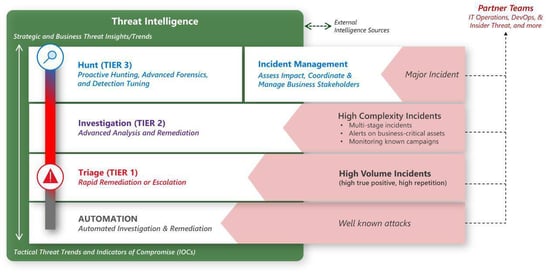
Image 1: Microsoft’s Security Operations Model from their Cloud Architected Framework
Identifying the Critical Components of Your Security Operations.
Developing a more comprehensive Security Operations Framework involves breaking down the high-level components into frameworks and processes. This technique presents each component as several manageable parts and thus reduces its complexity.
For example, take the following SOC components and their underlying frameworks and processes:
Security Research
- Threat Intelligence Feeds (paid service, Mitre ATT&CK, etc.)
- Maintain a list of research sites that are checked regularly for new threats to your organization.
- Develop new processes/procedures for defending against these new threats.
- Use tools to monitor and understand your network’s attack paths.
Logging, detection, and alert tuning
- Develop a ‘logging framework’ to streamline the onboarding process for new logs.
- Create a ‘threat detection workflow’ for consistent development of threat-related detections.
- Develop an alert tuning process for identifying and tuning false positive alerts.
Incident Response
- Create an investigative workflow for each unique incident type – e.g., Investigation steps for internal/external users, IP addresses, EDR alerts, phishing.
Reporting and Dashboards
- Compliance Reports
- For all log sources – used by the audit team - Threat Reports
- For security-specific log sources – used by the SOC team
New Application Onboarding
- Create an application onboarding framework that includes steps for the above SOC components.
Automation
- Use tools like SOAR and AI to develop automation for all the above components.
Summary
Security Operations require several layers of well-developed people, processes, and technologies.
The use of a mature architecture framework can speed up the process of developing this complex infrastructure.
References
- Microsoft Cloud Adoption Framework for Security Operations
- Modernization of Security Operations Processes
- A playbook for modernizing security operations
About This Blog Series
Follow the full series here: Building Defenses with Modern Security Solutions
This series discusses a list of key cybersecurity defense topics. The full collection of posts and labs can be used as an educational tool for implementing cybersecurity defenses.
Labs
For quick walkthrough labs on the topics in this blog series, check out the story of “ZPM Incorporated” and their steps to implementing all the solutions discussed here.
Compliance
All topics mentioned in this series have been mapped to several compliance controls here.